
Key Takeaways
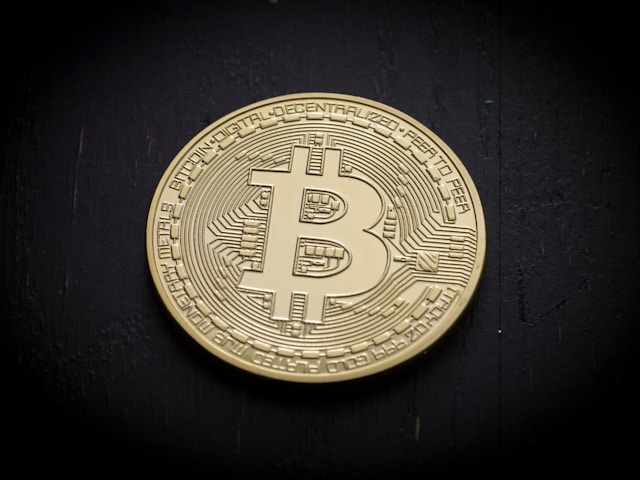
- A Bitcoin wallet linked to Clifton Collins moved 500 BTC after roughly 10 years of inactivity, and the transfer was sent to Coinbase Prime.
- Collins was convicted in Ireland and had built a much larger stash of about 6,000 BTC from cannabis profits in 2011 and 2012.
- For years, the coins were considered inaccessible because the private keys were lost after his belongings were discarded.
- Recent reports suggest Irish authorities, with Europol support, were able to recover at least part of the wallet.
- The episode shows how old crypto cases can come back to life when blockchain tools and law enforcement capabilities improve.
A Bitcoin wallet tied to Irish drug dealer Clifton Collins has suddenly moved again after years of silence, and the shift has caught the crypto world’s attention. The wallet transferred 500 BTC to Coinbase Prime after about a decade of dormancy, which makes this more than a simple on-chain movement. It is a reminder that old wallets do not always stay forgotten forever.
What Happened
Collins first became known in crypto circles for an unusual reason. He bought Bitcoin in 2011 and 2012 using money linked to cannabis sales, when BTC was still trading at only a few dollars. Later reporting said he spread the coins across 12 wallets, each holding 500 BTC, and that the private keys were written down on paper and hidden in a fishing rod case.
That setup turned into a disaster after his arrest in 2017. His property was cleared out, the paper containing the access details disappeared, and the coins were widely believed to be lost. In 2020, Irish reporting said authorities had already seized the wallets but still could not access them because the keys were missing.
Now the story has taken a new turn. The latest movement involved 500 BTC, and multiple reports say the transfer went to Coinbase Prime. Some reports describe the wallet as “likely moved by police,” while others say Irish authorities, working with Europol’s cybercrime team, cracked one of the wallets and recovered the funds. Either way, the long-dormant stash is no longer frozen in place.
Why This Wallet Matters
This is not just a crime story. It is also a crypto operations story. For years, people have assumed that losing a seed phrase or private key means the funds are gone for good. That is often true. But this case shows that time, forensic tools, and law-enforcement coordination can change the outcome. A wallet that looked dead can become active again, and when that happens, the value at stake can be massive.
It also highlights one of Bitcoin’s biggest strengths and weaknesses. On one hand, the network is transparent, so large movements are visible. On the other hand, control still depends on keys, and whoever controls those keys controls the coins. That is why old wallets tied to criminals, lost backups, or court cases often remain unresolved for years.
For investigators, the case is a proof of concept. If one wallet can be opened after years of failure, others may not be safe forever either. For the rest of the market, the lesson is simpler: in crypto, inactivity does not always mean finality. Sometimes it just means no one has found the right key yet.
Conclusion
The revival of this 500 BTC wallet turns an old Irish crime case into a fresh crypto headline. It brings together lost keys, blockchain tracing, and law-enforcement persistence in one unusual story. More importantly, it shows that even after a decade, dormant Bitcoin can still surprise everyone.