

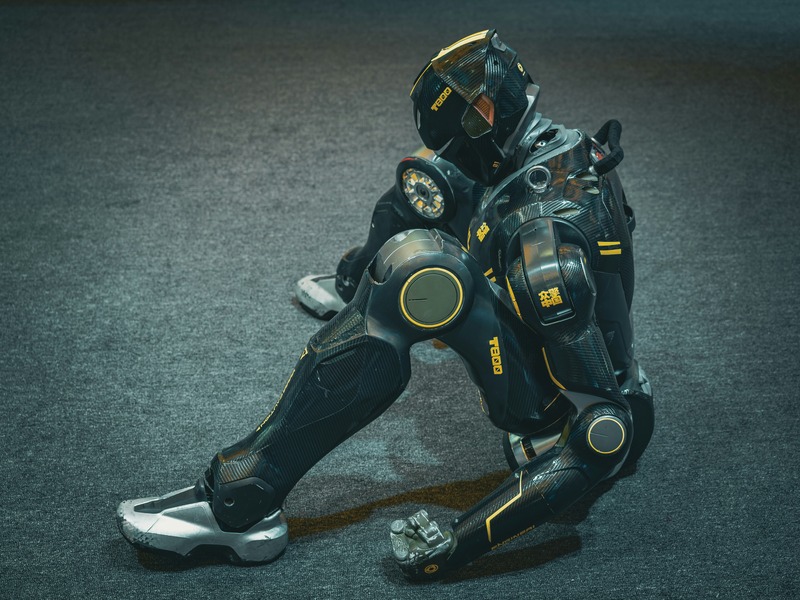
Unitree Robotics has taken a major step toward going public in Shanghai, filing for an initial public offering that could raise about 4.2 billion yuan, or roughly $610 million. The move is more than a fundraising event. It is also a real test of how much investor appetite exists for humanoid robots, one of the most talked-about areas in China’s technology sector right now.
The company’s timing is notable. Unitree has recently become far more visible in public life, especially after its robots appeared in China’s Spring Festival gala performance last month. That performance, which featured humanoid robots handling swords and nunchucks alongside human dancers, showed how far the technology has advanced in a short time. It also helped turn Unitree into a name many people outside the robotics world now recognize.
Why this IPO matters
This is not just another startup listing. Reuters described Unitree’s planned IPO as one of China’s biggest domestic tech listings in years. That matters because it suggests the company is trying to raise capital at a moment when Beijing is encouraging strong local technology firms to tap public markets and support longer-term industrial goals. In other words, this deal is about more than one company’s balance sheet. It also reflects how China wants to position itself in the next wave of advanced manufacturing and robotics.
For readers who do not follow robotics closely, here is the simple version: a humanoid robot is built to resemble the human body and move in ways that are useful in human environments. That makes it appealing for tasks that need flexibility, mobility, and interaction in places designed for people. Unitree is trying to prove that this is not just a demo technology. It wants investors to believe humanoid robots can become a real business with strong commercial demand.
Unitree’s growth has been rapid
The numbers in the prospectus point to very fast growth. Unitree said its operating income rose 335% year over year in 2025 to 1.708 billion yuan, while net profit jumped 674%. Those figures help explain why the company believes public-market investors may be ready to back it. Fast revenue growth can signal strong demand, but it can also mean the company is still in an early phase where market share and expansion matter more than stable margins.
Humanoid robots have become the company’s key growth engine. Reuters reported that humanoids accounted for 51.5% of Unitree’s main business revenue in January through September 2025, up from 27.6% in 2024. That is a sharp shift in a short period. It suggests Unitree is not treating humanoids as a side project; they are now central to its commercial strategy.
There is a trade-off, though. Unitree’s move into the lower-priced G1 model appears to have reduced gross margin. That is a common challenge for hardware companies: lower-cost products can help expand adoption, but they can also squeeze profitability if manufacturing costs remain high. So while the business is growing quickly, the IPO will likely help investors judge whether that growth can stay healthy over time.
What Unitree is actually selling
At the moment, real-world use for humanoid robots is still limited. According to Unitree’s prospectus, much of the company’s industry-application revenue comes from enterprise reception, tour-guide services, intelligent manufacturing, and intelligent inspection. Enterprise tour-guide use alone made up roughly 50% to 70% of that revenue mix. That is useful to know, because it shows where the market is today: not in fully autonomous factories, but in practical, visible tasks where robots can already add value.
This is an important detail for anyone watching the robotics sector. The biggest ideas in tech often arrive before the biggest profits do. Humanoid robots may eventually work on factory floors, in warehouses, or in public-facing roles across many industries. But for now, companies like Unitree are still proving where the technology fits best, what customers will pay for it, and how quickly deployment can scale beyond demonstrations and pilot projects.
China sees humanoid robots as strategic
Unitree’s listing also lands in a broader national policy context. Reuters reported that China views embodied artificial intelligence as a key future strategic industry, alongside areas such as quantum technology, 6G, nuclear fusion, and brain-computer interfaces. That matters because industries with strategic status often receive stronger policy support, more attention from investors, and better access to supply-chain resources.
China is also planning wider deployment of humanoid robots and AI automation in production lines nationwide, as part of a broader push to apply artificial intelligence across society and improve productivity. That is a big ambition, but the article makes clear that deployment is still early. The gap between policy goals and factory reality remains significant.
Even so, China has some advantages. Reuters noted that the country is well positioned to lead in humanoid robots because of its broad and largely self-sufficient manufacturing supply chains. In practical terms, that means the country can build components, assemble machines, and scale production with fewer outside dependencies than many competitors. For a hardware-heavy industry, that is a serious advantage.
Market position and global ambitions
Unitree says it shipped more than 5,500 units last year and held 32.4% of the global humanoid market, according to its prospectus. The company was founded in 2016 and has become a familiar name in Chinese robotics circles, especially among universities and research groups. It is also increasingly visible in entertainment and sporting events, which has helped build brand recognition beyond the lab.
That combination matters. A robotics company does not win simply by making impressive machines. It also needs production capability, a clear market, and enough trust from buyers and investors to keep expanding. Unitree appears to be trying to show all three at once: technical progress, commercial traction, and enough scale to compete in a sector that is still forming.
What to watch next
The key question now is whether public-market investors treat humanoid robots as a near-term business or a long-term story. Unitree’s IPO will help answer that. If demand is strong, it could open the door for more robotics firms to pursue listings and raise capital for faster expansion. If demand is weak, it may signal that investors still want clearer proof of real-world adoption before committing major money. That is the real test behind this filing.
For now, Unitree is in a strong spotlight. It has growth, visibility, and government-policy tailwinds on its side. But it also faces the same challenge that many advanced hardware companies face: turning technical excitement into steady commercial results. The Shanghai IPO will show whether investors believe humanoid robots are ready for the next stage.